


Harley Kaplan is a New York-based casting director who built his career in the heyday of American independent film — working on landmark projects, discovering talent across continents, and following his instincts rather than the industry playbook.
For the feature film Real, True 100 Percent Love, he used etalenta to cast European actors — and was immediately won over. We spoke with him about the experience, his philosophy, and what he wishes the industry would rediscover.
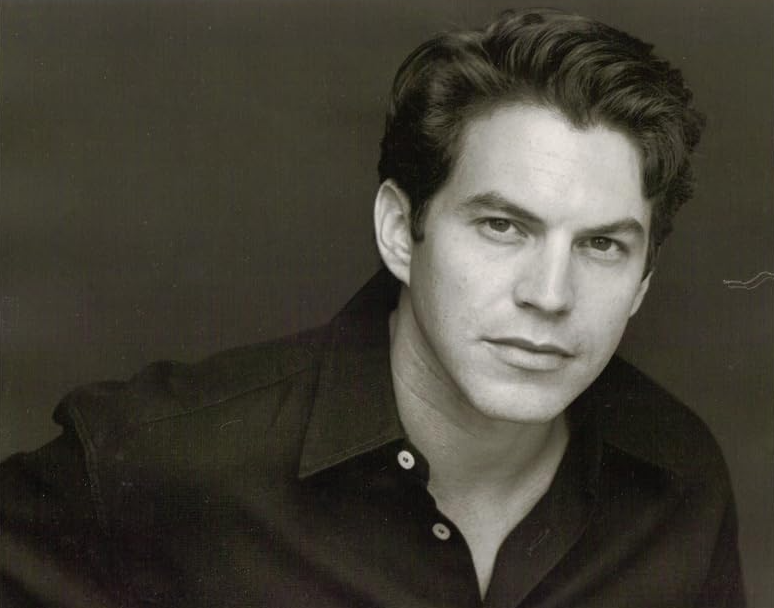
Harley, you didn’t exactly plan to become a casting director. How did it all begin?

I fell into it, I knew nothing about casting! I was acting, getting callbacks and being cast in lots of things. I lived in Jersey City then and going back and forth to Manhattan for auditions. I would have an audition at 10am, a different one at 2pm and then a callback or something else at 6pm. I just ended up hanging out in the office. This was back when, in order to read a script, you had to go to the casting office or your agent’s. So I read scripts while I sat around. I was an English major in college and I remember seeing the Terrence Davies adaptation of Edith Wharton’s The House of Mirth. I ended up putting a list of actors together off the top of my head, as there was no IMDB. I just knew my competition. I knew what was out there and I saw everything in theatres, movies, indie films, I read Variety and the Hollywood Reporter. So they were really impressed with the people I put together and a lot of them ended up actually getting cast.
I worked in the heyday of indie films, movies like Boys Don’t Cry and I Shot Andy Warhol. I didn’t want to get credited at the time because I thought it was a conflict of interest with acting. But eventually, they sent me over to Silvercup Studios to work on a show called Sex and the City. With that name, I thought it was a reality show! I was very impressed with the calibre of the people that all of a sudden I was working with. They really valued my opinion. I would act out all the other roles on a stage at those auditions. It was kind of like a bootcamp of both acting and casting. I also ended up producing on top of that. And then a major producer asked me to cast a feature on my own. I brought in an associate. From then on, it was just word of mouth. I’ve never had a business card or website. Casting has come to me 100%. That’s really rare in life. I tell actors to keep their blinders off. Don’t be so focused on getting from point A to point B that you miss everything along the way. Because really, that’s what life is — the journey.
That brings us to Real, True 100 Percent Love. How did this project come about?
I’ve worked with Jillie Simon, the director (co-director with her husband Thomas Simon on this film), on a couple of other projects. I had been cast as an actor in one of their shorts, Hungry. Jillie and I first worked together on a movie called You Have the Right to Remain Violent, I think in 2008. It was a pretty gritty indie.
The logline for REAL, TRUE 100 PERCENT LOVE is “rock star Ellie Dacosta’s romantic decisions are so bad, they’re a matter of national security.” The script combined activism with music. It’s a rock and roll spy romantic comedy — hard to even categorize, which I love. It doesn’t just fit into one genre and it’s different than anything I’ve ever done. I never like doing the same genre over and over. Nothing is sleepwalking or colouring by numbers with me.
How did etalenta come into the picture?
We were in pre-production for almost a year. The directors had fallen in love with Bucharest years before — they played there as musicians — so they were set on shooting there. It was a challenge, of course. I submitted a breakdown to Breakdown Services in the US and they told me about etalenta. From the minute I spoke with your colleague Claudia, I was sold. I was so much happier with the platform. It’s a nonprofit, really actor-friendly and lets actors communicate with the production. It’s just wonderful. It was a breeze. We really found talent that we couldn’t have found elsewhere. I was so happy with it. Even dealing with the agents was a much quicker process. Everything was so smooth. And the actors were a dream.
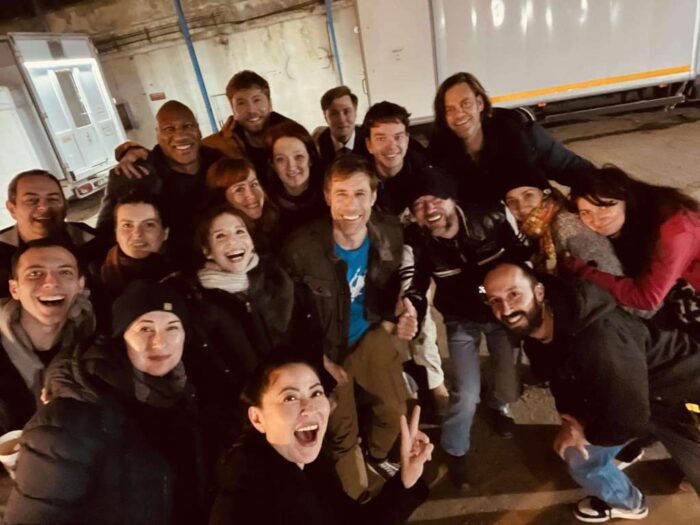
Cast & crew group shot from Bucharest with etalenta members (actors) Ty Fisher, Raul Pacurar and Tiberiu Harsan (upper top)
Was there something specific a candidate did that convinced you they were right for the role?
There was so much uniqueness, creativity and professionalism in the actors. We spoke to them for the specific role we originally called them in for and then we thought, you know, is there some other way we could add them? There was this great flexibility. And another thing was the actors’ availability to be a local hire. When we cast a movie in New York and we want a local, we’ll get submissions from Los Angeles, which is on the other side of the country. But we didn’t have that problem with this casting. We had actors out of Berlin, Paris and Scandinavia. We were auditioning people on trains. It was so much fun to see them and their milieu. They just jumped right into the character. People we never would have found here. And they gave so much.
We had this great read-through with I don’t know how many dozens of actors. I think we were in eight countries, all four time zones in the US — and we’re just seeing these actors, who brought so much enthusiasm and excitement to their roles. I would love to work with each of them again. I want to do more European films just because of the platform.
Was the casting process for this film different from the way you normally work?
Absolutely, yes. Jillie was in Bucharest with the original auditions and I was watching stuff online. We had in-person auditions and chemistry reads in New York, which was so important to me. I remember the chemistry reads at the beginning during the pandemic on Zoom with people’s glitches and such. You just don’t feel the energy, which I need.
We did every type of audition we could on this movie. It felt like going back to the great days of indies. What else was different was that I was working with Jillie and we were in tandem on all our decisions. A lot of that was because of etalenta. It wasn’t just me sending my selects or sending tapes through. We were watching things at the same time, our feedback was instantaneous. And we were sharing what we felt. And you can’t do that here. So that just made it all exciting again. I was excited to see my messages on etalenta, I was thrilled about how quickly agents responded. We looked through thousands of actors on the site. I would send out a message at 23:05 and at 23:07 I would get an answer. People really value this site!
Is there something specific that you think should always be on an actor’s profile?
Obviously where you’re located is super important. And be truthful about your dialects.
During the casting, it was very important for Jillie to see a reel. She wanted reels from 90% of the people she really wanted to see. I look at the photos.
I feel that since the actors submitted, it’s my job as a casting director to look at absolutely every single person. I have to. So I’ll stay up all night and look at their submissions. I will switch up ages, ethnicities, genders, because you can do that in independent film. It has to be more of a painting to me — I have to take an artistic approach. There’s no science there.
Did you accept submissions from actors who are not represented by an agent or manager?
That didn’t matter at all. What did matter was the work. But if I know the agents and I have a relationship with them, I’ll do that just because that’s the way it should work. But that doesn’t matter to me at all. I always tell actors that having a bad agent often is worse than not having an agent. There are some agents I won’t work with. I always tell actors they can contact me directly if they have a question about a rep.
What changes would you like to see in the US and international film and TV industry?
Well, I like the international industry more as a whole because they value independent films way more. There’s creativity — here it’s all just become Marvel and DC Universe. And if you look at the top 20 films on Box Office Mojo, I think everything besides Sinners and Elio are sequels or remakes. I was there in the heyday of independent films. So I would like to bring back the simplicity — the neighbourhood theatre you walk to and escape for a couple of hours. You experience life through somebody else’s eyes, walk in someone else’s shoes. It makes you a better person, I think.
Among the cast members found through etalenta for Real, True 100 Percent Love were Greg Kriek, Verónica del Cerro, Ty Fisher, Tiberiu Harsan, Petri Stefanescu, Ana Turos, Voicu Aanitei, Rares Zimbran, Raul Pacurar, Cheherezade Okotaka-Ebale, Alexandra Bob, Aurelian Tertiu, Iulian Burciu, Corneliu Dragomirescu, Sidonia Doica and Vlad Marinescu.
And finally — if you could say one thing to the actresses and actors reading this, what would it be?
Don’t give up, don’t let other people define your success — and if you have an audition, think of that as a performance and own it. Find joy in just performing. So many things are out of your control, but things like that aren’t. You are often your worst enemy; everything does not revolve around you. Just let it go. Audition and let it go. Live your life.
This interview has been edited for length and clarity.

